Amy Loughren Becomes a Police Informant
The Good Nurse: A True Story of Medicine, Madness, and MurderAmy Loughren Becomes a Police Informant marks the point when Amy’s loyalty to Charles Cullen collides with evidence that her friend may have killed patients. The change is neither immediate nor simple: she begins frightened and defensive, then uses her nursing expertise to interpret records that investigators cannot fully read on their own. Her cooperation becomes a practical bridge between a police investigation and the workings of a hospital unit.
From Colleague to Suspect in the Rumors
Before the detectives approached her, Amy had resisted becoming involved in the investigation. Rumors had spread through Somerset Medical Center, and nurses whispered, formed alliances, and worried that police interviews might threaten their jobs. Because Amy was known as Cullen’s friend, and had challenged a new insulin sign-out procedure, other nurses began to connect her with the inquiry. She was afraid for herself as well as for her position: she checked that her nursing license had not expired, wondered whether she needed a lawyer, and repeatedly called in sick when detectives scheduled interviews.
The insulin dispute had already made Amy alert to what hospital management would not explain. Nurses had previously found insulin in a small refrigerator without the new sign-out procedure. Now they were being asked to electronically attest to how much remained in a vial, although Amy considered the estimate unreliable. She refused to sign and demanded to know why insulin was being treated like a narcotic. Her supervisor gave her no explanation. The unanswered question later acquired a darker significance, but at the time Amy understood it as a troubling change in protocol that the hospital would not account for.
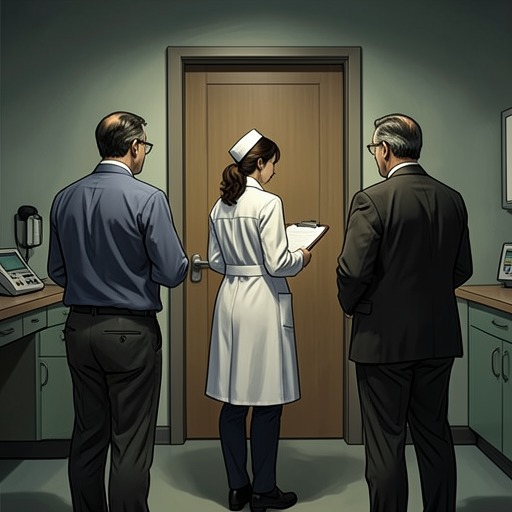
When Amy finally sat down with Danny Baldwin and Mary Lund, she did not conceal her anger. She admitted that the rumors about Cullen and the investigation had upset her, and that she feared for her job. Baldwin recognized that her candor set her apart from the other nurses he had interviewed. Amy left the meeting unsettled: instead of simply questioning her, Baldwin had supplied information about the cases and about Cullen. The encounter began to loosen her certainty without yet resolving the conflict between what she had heard and what she believed about her friend.
The Pyxis Record and the Rupture of Trust
The decisive turn came when Baldwin slid across a Pyxis printout from the night Reverend Gall died. Amy recognized the record and understood its importance. Cullen’s medication activity could no longer be dismissed as gossip or as an abstract police suspicion: the page made it possible to imagine that he had done something terrible during those shifts. Yet Amy could not immediately reconcile that possibility with her image of the man she had trusted.
The paper did not make her response simple. At home, she sat with the records and the knowledge that Gall had died; the possibility that a nurse had caused the death was now entangled with the possibility that her friend had. Amy’s long struggle with trust made this more than a professional dilemma. She had built a tough, self-protective identity around the belief that she had to rely on her own judgment. The evidence challenged both her confidence in Cullen and the defenses she had formed against being deceived.
The detectives later visited Amy at home and laid out the Somerset Medical Center case in greater detail. Baldwin’s earlier printout was only one page among a stack. As Amy examined the records, she became agitated not because one drug order alone settled the question, but because the orders accumulated into a pattern. Tim Braun and Baldwin asked her to help them stop Cullen, keep track of how he was doing, and serve as their eyes and ears. Amy hesitated. The investigators were strangers, the allegations might be wrong, and cooperation would require her to lie to Cullen and to her employer. She saw a real risk to her job and could not yet decide whether loyalty meant taking her friend’s side or helping establish what had happened.
A Family Decision and a Formal Role
Amy did not accept the assignment casually. After the detectives left, she considered what their request could mean for her and her family. She told her eleven-year-old daughter, Alex, that a nurse they knew might have killed a patient, perhaps more than one, and that the police wanted her help. Amy warned her that people might talk and that the work might be dangerous, even though she did not think danger was certain. Rather than treating the decision as hers alone, she framed it as a family decision.
Alex’s response helped Amy reach a decision: if Cullen might really be killing people, then Amy had to find out. Amy had said she would think about the detectives’ request and call them that night; her daughter’s answer gave the choice a direction without removing its risks. The episode establishes that Amy’s cooperation was not simply a sudden conversion to the police’s view. She brought the consequences into the open at home and sought her family’s participation before committing herself.
The investigators registered Amy as a consensual confidential informant authorized for both telephonic and body audio intercepts. They provided her with a room at the prosecutor’s office, but after her first taped calls she found it more comfortable to work from her living-room couch. The contrast matters: the case acquired a formal investigative arrangement, while much of Amy’s work took place in the ordinary spaces between work and sleep, with pages spread out in front of her.
Reading the Records as a Nurse
The detectives initially focused on Reverend Gall. The medical examiner’s reports identified digoxin overdose as the cause of death, and Pyxis showed that Cullen had withdrawn digoxin the day before Gall’s fatal collapse. On its own, the withdrawal might have been coincidence. Amy saw the larger significance only by studying the paperwork over weeks. The drug names that appeared to the investigators as an obscure list were familiar to her as a nurse; she knew which medicines patients might need and could identify requests that made no clinical sense.
Page after page showed Cullen ordering rarely used drugs in striking quantities and then canceling the orders. On the night Gall died, for example, the system showed an order for digoxin followed by a cancellation, making it appear that Cullen had never withdrawn the drug. But Gall had received digoxin and died. Amy’s clinical reading connected the canceled entries, medication choices, and patient events into a pattern that neither a single printout nor a list of dates could reveal by itself.
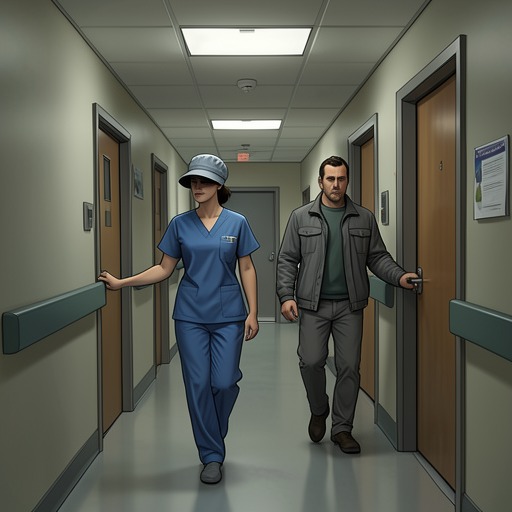
Her discovery also changed the investigators’ understanding of the medication system. Recalling Cullen’s usual position at the end of the L-shaped hallway, Amy reconsidered a familiar routine: after report, he wheeled the portable Cerner computer away from the nursing station and stood near the doors used by the pharmacy runner. She had taken his position and willingness to collect the delivery tote as helpfulness. Now she recognized that this route could give him access to drugs without a Pyxis transaction. The insight did not erase the value of the Pyxis records; it explained why those records might not show every drug Cullen could obtain.
The Cost and Reach of Cooperation
Amy’s role expanded from responding to police questions to helping them interpret and preserve information. She brought her knowledge of Cerner patient records to the investigators’ attention, understanding that the Somerset County Prosecutor’s Office would need the records in full and unaltered. While a detective began the subpoena paperwork, Amy saw that she had another way to obtain information. She started bringing a larger purse to work, as she tried to gather Cullen’s Cerner records without drawing notice. The evidence describes this as an improvised effort made under time pressure, not as a consequence-free investigative method.
The strain grew with the work. Amy feared being fired by the institution she was trying to help improve and felt alone in the risk of having broken rank. Her colleagues’ suspicion and the obligation to conceal her cooperation made her feel increasingly exposed. Yet her contact with Braun and Baldwin offered some relief: she brought them successive stacks of paperwork and shared coffee with them after shifts, and seeing them continue to work made her feel less alone and more courageous.
The episode’s significance lies in the kind of knowledge Amy contributes. She is not merely a friend who changes her mind, nor simply a source who reports what Cullen says. Her familiarity with ICU practice allows her to recognize the clinical absurdity of drug requests, see the significance of canceled orders, and reconsider the physical route by which pharmacy deliveries reached the unit. Her cooperation turns personal trust into a source of painful doubt, then turns professional knowledge into investigative evidence. The change remains costly and incomplete: Amy can help the detectives assemble the case, but she cannot make the friendship she had trusted fit the records she has learned to read.